
Bearing Weight Chart
Unit weight in kg for 107 deep groove ball, tapered roller and spherical roller bearings, taken from the FULI catalogue with the page for each row.
This model is not in the chart yet. Some catalogue weights are still being checked: send us the model and we will check the weight for you.
Ball bearing weight chart: deep groove 160, 60, 62, 63 and 64 series
The catalogue prints one reference weight on each size line. The open, ZZ and 2RS versions share that line, and no separate weight is printed for the shielded or sealed versions.
| Model | d × D × B (mm) | Weight (kg), FULI catalogue | Catalogue page | Net weight for pcs (kg) |
|---|---|---|---|---|
| 16004 | 20 × 42 × 8 | 0.048 | p. 140 | |
| 16005 | 25 × 47 × 8 | 0.059 | p. 141 | |
| 6000 | 10 × 26 × 8 | 0.018 | p. 140 | |
| 6001 | 12 × 28 × 8 | 0.022 | p. 140 | |
| 6002 | 15 × 32 × 9 | 0.031 | p. 140 | |
| 6003 | 17 × 35 × 10 | 0.041 | p. 140 | |
| 6004 | 20 × 42 × 12 | 0.068 | p. 140 | |
| 6005 | 25 × 47 × 12 | 0.079 | p. 141 | |
| 6006 | 30 × 55 × 13 | 0.116 | p. 141 | |
| 6007 | 35 × 62 × 14 | 0.151 | p. 141 | |
| 6008 | 40 × 68 × 15 | 0.190 | p. 141 | |
| 6009 | 45 × 75 × 16 | 0.241 | p. 141 | |
| 6010 | 50 × 80 × 16 | 0.261 | p. 142 | |
| 6011 | 55 × 90 × 18 | 0.381 | p. 142 | |
| 6012 | 60 × 95 × 18 | 0.412 | p. 142 | |
| 6013 | 65 × 100 × 18 | 0.439 | p. 142 | |
| 6014 | 70 × 110 × 20 | 0.608 | p. 142 | |
| 6015 | 75 × 115 × 20 | 0.649 | p. 142 | |
| 6016 | 80 × 125 × 22 | 0.872 | p. 143 | |
| 6017 | 85 × 130 × 22 | 0.918 | p. 143 | |
| 6018 | 90 × 140 × 24 | 1.190 | p. 143 | |
| 6019 | 95 × 145 × 24 | 1.230 | p. 143 | |
| 6020 | 100 × 150 × 24 | 1.290 | p. 143 | |
| 6200 | 10 × 30 × 9 | 0.032 | p. 140 | |
| 6201 | 12 × 32 × 10 | 0.037 | p. 140 | |
| 6202 | 15 × 35 × 11 | 0.045 | p. 140 | |
| 6203 | 17 × 40 × 12 | 0.067 | p. 140 | |
| 6204 | 20 × 47 × 14 | 0.107 | p. 140 | |
| 6205 | 25 × 52 × 15 | 0.129 | p. 141 | |
| 6206 | 30 × 62 × 16 | 0.199 | p. 141 | |
| 6207 | 35 × 72 × 17 | 0.284 | p. 141 | |
| 6208 | 40 × 80 × 18 | 0.366 | p. 141 | |
| 6209 | 45 × 85 × 19 | 0.420 | p. 141 | |
| 6210 | 50 × 90 × 20 | 0.459 | p. 142 | |
| 6211 | 55 × 100 × 21 | 0.619 | p. 142 | |
| 6212 | 60 × 110 × 22 | 0.783 | p. 142 | |
| 6213 | 65 × 120 × 23 | 1.000 | p. 142 | |
| 6214 | 70 × 125 × 24 | 1.090 | p. 142 | |
| 6215 | 75 × 130 × 25 | 1.190 | p. 143 | |
| 6216 | 80 × 140 × 26 | 1.420 | p. 143 | |
| 6217 | 85 × 150 × 28 | 1.760 | p. 143 | |
| 6218 | 90 × 160 × 30 | 2.180 | p. 143 | |
| 6219 | 95 × 170 × 32 | 2.640 | p. 143 | |
| 6220 | 100 × 180 × 34 | 3.170 | p. 143 | |
| 6300 | 10 × 35 × 11 | 0.052 | p. 140 | |
| 6301 | 12 × 37 × 12 | 0.060 | p. 140 | |
| 6302 | 15 × 42 × 13 | 0.083 | p. 140 | |
| 6303 | 17 × 47 × 14 | 0.113 | p. 140 | |
| 6304 | 20 × 52 × 15 | 0.145 | p. 140 | |
| 6305 | 25 × 62 × 17 | 0.235 | p. 141 | |
| 6306 | 30 × 72 × 19 | 0.345 | p. 141 | |
| 6307 | 35 × 80 × 21 | 0.464 | p. 141 | |
| 6308 | 40 × 90 × 23 | 0.636 | p. 141 | |
| 6309 | 45 × 100 × 25 | 0.829 | p. 141 | |
| 6310 | 50 × 110 × 27 | 1.060 | p. 142 | |
| 6311 | 55 × 120 × 29 | 1.370 | p. 142 | |
| 6312 | 60 × 130 × 31 | 1.720 | p. 142 | |
| 6313 | 65 × 140 × 33 | 2.110 | p. 142 | |
| 6314 | 70 × 150 × 35 | 2.570 | p. 142 | |
| 6315 | 75 × 160 × 37 | 3.080 | p. 143 | |
| 6316 | 80 × 170 × 39 | 3.670 | p. 143 | |
| 6317 | 85 × 180 × 41 | 4.280 | p. 143 | |
| 6318 | 90 × 190 × 43 | 4.980 | p. 143 | |
| 6319 | 95 × 200 × 45 | 5.760 | p. 143 | |
| 6320 | 100 × 215 × 47 | 7.040 | p. 143 | |
| 6403 | 17 × 62 × 17 | 0.270 | p. 140 | |
| 6404 | 20 × 72 × 19 | 0.400 | p. 140 | |
| 6405 | 25 × 80 × 21 | 0.530 | p. 141 | |
| 6406 | 30 × 90 × 23 | 0.735 | p. 141 | |
| 6407 | 35 × 100 × 25 | 0.952 | p. 141 | |
| 6408 | 40 × 110 × 27 | 1.230 | p. 141 |
Tapered roller bearing weight: 302, 303 and 322 series
One weight per bearing (cone and cup together). T is the total width of the assembled bearing.
| Model | d × D × T (mm) | Weight (kg), FULI catalogue | Catalogue page | Net weight for pcs (kg) |
|---|---|---|---|---|
| 30204 | 20 × 47 × 15.25 | 0.126 | p. 133 | |
| 30205 | 25 × 52 × 16.25 | 0.153 | p. 133 | |
| 30206 | 30 × 62 × 17.25 | 0.231 | p. 133 | |
| 30207 | 35 × 72 × 18.25 | 0.332 | p. 133 | |
| 30208 | 40 × 80 × 19.75 | 0.417 | p. 133 | |
| 30209 | 45 × 85 × 20.75 | 0.473 | p. 133 | |
| 30210 | 50 × 90 × 21.75 | 0.529 | p. 133 | |
| 30211 | 55 × 100 × 22.75 | 0.715 | p. 133 | |
| 30212 | 60 × 110 × 23.75 | 0.905 | p. 133 | |
| 30304 | 20 × 52 × 16.25 | 0.166 | p. 136 | |
| 30305 | 25 × 62 × 18.25 | 0.266 | p. 136 | |
| 30306 | 30 × 72 × 20.75 | 0.385 | p. 136 | |
| 30307 | 35 × 80 × 22.75 | 0.515 | p. 136 | |
| 30308 | 40 × 90 × 25.25 | 0.748 | p. 136 | |
| 30310 | 50 × 110 × 29.25 | 1.289 | p. 137 | |
| 32205 | 25 × 52 × 19.25 | 0.2 | p. 137 | |
| 32206 | 30 × 62 × 21.25 | 0.287 | p. 137 | |
| 32207 | 35 × 72 × 24.25 | 0.447 | p. 137 | |
| 32208 | 40 × 80 × 24.75 | 0.531 | p. 137 | |
| 32209 | 45 × 85 × 24.75 | 0.573 | p. 137 | |
| 32210 | 50 × 90 × 24.75 | 0.626 | p. 137 | |
| 32211 | 55 × 100 × 26.75 | 0.853 | p. 137 | |
| 32212 | 60 × 110 × 29.75 | 1.168 | p. 137 |
Spherical roller bearing weight: 222 and 230 series
The catalogue prints one reference weight on each size line, which lists the cylindrical bore and the tapered bore (K) versions together.
| Model | d × D × B (mm) | Weight (kg), FULI catalogue | Catalogue page | Net weight for pcs (kg) |
|---|---|---|---|---|
| 22205 | 25 × 52 × 18 | 0.17 | p. 75 | |
| 22206 | 30 × 62 × 20 | 0.29 | p. 75 | |
| 22207 | 35 × 72 × 23 | 0.46 | p. 75 | |
| 22208 | 40 × 80 × 23 | 0.53 | p. 75 | |
| 22209 | 45 × 85 × 23 | 0.59 | p. 75 | |
| 22210 | 50 × 90 × 23 | 0.63 | p. 75 | |
| 22211 | 55 × 100 × 25 | 0.84 | p. 75 | |
| 22212 | 60 × 110 × 28 | 1.15 | p. 75 | |
| 22213 | 65 × 120 × 31 | 1.55 | p. 75 | |
| 22215 | 75 × 130 × 31 | 1.70 | p. 75 | |
| 22217 | 85 × 150 × 36 | 2.66 | p. 76 | |
| 22220 | 100 × 180 × 46 | 4.90 | p. 76 | |
| 23022 | 110 × 170 × 45 | 3.80 | p. 76 |
Values from FULI's catalog; confirm for your application. Weights are for one bearing, without packaging.
This bearing weight chart gives the weight of one bearing in kilograms for 107 metric models, copied from the FULI catalogue with the catalogue page next to each figure. Type a model to find its row, or add a quantity and the chart multiplies it out to the bearing net weight for your packing list or freight quote.
How to use this bearing weight chart
The chart has one table per family. Each row gives the model, its size in millimetres, the weight printed in the FULI catalogue and the page that weight is printed on:
- Deep groove ball bearings: 71 models from the 160, 60, 62, 63 and 64 series.
- Tapered roller bearings: 23 models from the 302, 303 and 322 series.
- Spherical roller bearings: 13 models from the 222 and 230 series.
Deep groove ball bearing weights are on catalogue pages 140 to 143, tapered roller bearing weights on pages 133, 136 and 137, and spherical roller bearing weights on pages 75 and 76. If someone on your side asks where a figure came from, the page number is the answer.
There are two boxes above the tables. The Model box filters the rows: type the first digits, and anything after the base number is ignored, so 6204-2RS finds 6204. The Quantity box is optional. Enter a whole number of pieces and a new column appears with the quantity multiplied by the catalogue weight, which is the weight of the bearings alone.
The chart does not estimate anything. A model is listed only when two things are true: its size has been checked against at least two published size tables, and its weight is printed in the FULI catalogue and has passed our own check. The bearing size chart uses the same checked sizes.
Ball bearing weight chart: why the same bore weighs more in each series
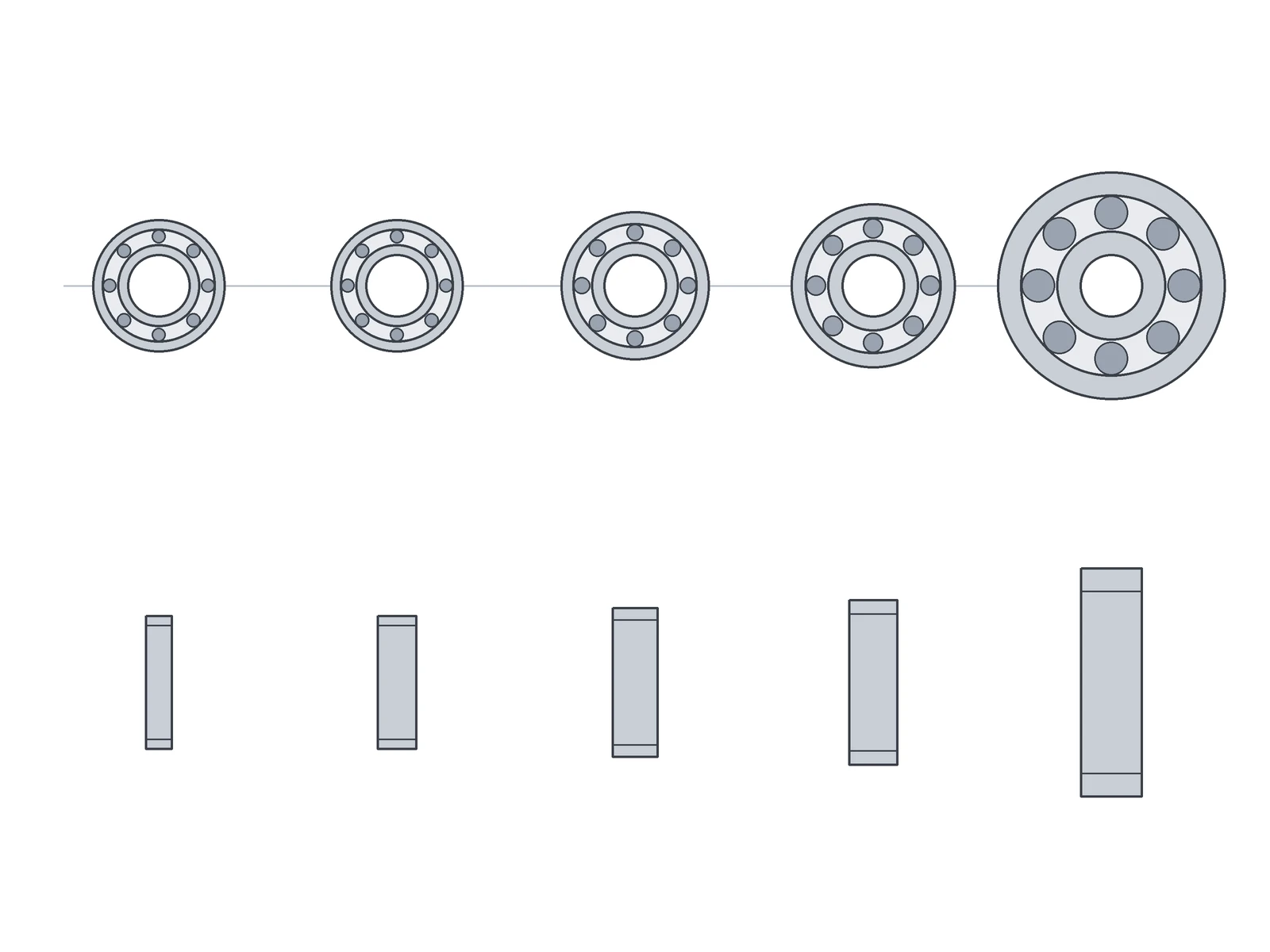
Buyers often describe a deep groove ball bearing by its bore, because that is the shaft size they know. The bore alone does not fix the weight. The series number decides the outside diameter and the width, and those decide how much steel is in the rings and how large the balls are. The chart has deep groove ball bearings with a 20 mm bore in five series:
- 16004 is 20 x 42 x 8 mm and weighs 0.048 kg (catalogue page 140).
- 6004 is 20 x 42 x 12 mm and weighs 0.068 kg (catalogue page 140).
- 6204 is 20 x 47 x 14 mm and weighs 0.107 kg (catalogue page 140).
- 6304 is 20 x 52 x 15 mm and weighs 0.145 kg (catalogue page 140).
- 6404 is 20 x 72 x 19 mm and weighs 0.400 kg (catalogue page 140).
From 16004 to 6404 the weight rises about eight times at the same 20 mm bore. That is why a request by bore size alone cannot be priced or weighed until the series is known. Write the full model, and if the old part is worn and the marking is gone, measure it and use the size chart to find the model before you ask for a weight.
A common small size makes the same point from the other end. 6000 is 10 x 26 x 8 mm and weighs 0.018 kg (catalogue page 140). A carton of these is light even in large quantities, so for small bearings the packaging can be a large share of what the scale shows.
Shields and seals are a frequent question. The deep groove ball bearing table prints one reference weight on each size line, and the open, ZZ and 2RS versions share that line. The catalogue does not print a separate weight for the shielded or sealed versions, so the chart shows the one figure. If your freight calculation needs a separate figure for the sealed version, ask us before you quote it.
Tapered and spherical roller bearing weight at the same bore and OD
Changing the bearing type changes the weight even when the bore and outside diameter stay the same. 6208, 30208, 32208 and 22208 each have a 40 mm bore and an 80 mm outside diameter:
- 6208 is 40 x 80 x 18 mm and weighs 0.366 kg (catalogue page 141).
- 30208 is 40 x 80 x 19.75 mm (T) and weighs 0.417 kg (catalogue page 133).
- 32208 is 40 x 80 x 24.75 mm (T) and weighs 0.531 kg (catalogue page 137).
- 22208 is 40 x 80 x 23 mm and weighs 0.53 kg (catalogue page 75).
The tapered roller weight is for the complete bearing, cone and cup together, and the third figure is the total width T of the assembled bearing. Cones and cups are separable, so if you buy them as separate parts, ask us for the part weights rather than splitting the bearing figure in half.
The spherical roller bearing table lists the cylindrical bore and the tapered bore (K) versions on the same line, with one weight. The chart follows the catalogue and shows that single figure under the base model.
When you replace one type with another, the weight on the order changes with it. Take the new figure from the table rather than scaling the old one by size. A weight worked out from dimensions or volume ignores the cage, the roller count and the internal geometry, and the catalogue already gives a figure for the bearing as made.
How to calculate bearing weight for a shipment
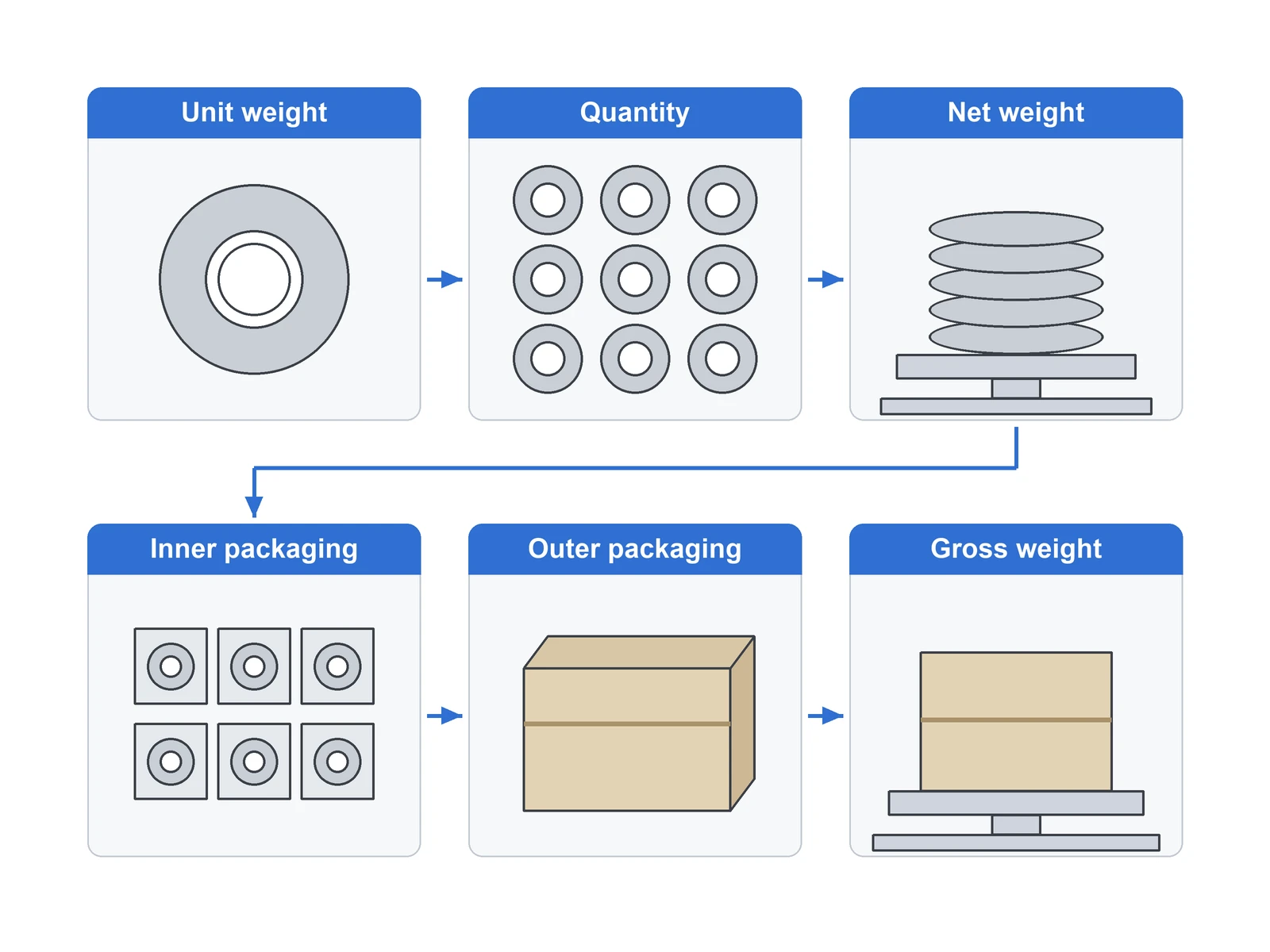
For a shipment the arithmetic is short: unit weight times quantity gives the net weight of the bearings. For example, 1,000 pieces of 6204 at 0.107 kg each make 107 kg of bearings. The Quantity box in the bearing weight chart does this multiplication for every row you filter.
That figure is the bearings only. An export packing list itemizes the goods with total net and gross weight in kilograms [2], so you need two numbers, and packaging sits between them:
- Unit weight: the catalogue weight of one bearing, from the chart.
- Quantity: the number of pieces of that model on the order line.
- Net weight: unit weight times quantity. Some document guides count inner packaging, such as individual boxes, in the net weight and leave out only the outer packaging [3]. Agree with your forwarder which convention your documents use, and keep the bearings-only figure on your own records either way.
- Inner packaging and outer packaging: individual boxes or tubes, cartons, pallets and wrapping. Their weight depends on the packing you choose, so it is not in the chart.
- Gross weight: the packed cartons on a scale, including outer packaging [3].
Catalogue weights are bearing weights. A published rolling bearing catalogue from another maker, for example, states that its masses do not include the weight of any packaging and are rounded to approximately ±5% of the actual value [1]. The FULI catalogue labels its weight column as a reference weight in kg. Use the chart for quotes, freight estimates and checking a delivery, and use the weighed cartons for the gross weight on the shipping documents.
In 2016 a well-known Asian bearing brand compared 51228 thrust bearing samples from several suppliers. A cheaper sample matched ours in appearance and dimensions. On a scale, its cage was clearly lighter, and broken open, the cage was hollow. Read how a scale caught a hollow brass cage.
If your forwarder or customer works in pounds, convert after you multiply: 1 kg = 2.205 lb and 1 lb = 0.45359 kg [1].
We recommend one more habit. When you send an inquiry, put the model, the quantity and the bearing net weight from this chart on the same line. Our export documents include a commercial invoice, packing list and CCPIT certificate of origin, and a clear net weight on your inquiry lets us check the packing list against it before the goods leave. Our pre-shipment batch checks cover rotation smoothness, dimensions, grease fill, rust and appearance.
Models not in the chart yet
A model is left out while its size has fewer than two published size tables behind it, or when its catalogue weight has not passed our check. Models missing from the FULI catalogue tables are not listed, and we do not fill the gap with weights taken from other makers or worked out from dimensions.
If you need one of these weights, send us the model and quantity through the inquiry form below, and we will tell you what we can confirm for that model. Backed by 20+ years of bearing export experience in Linqing, Shandong.
Sources
FAQ
How do I calculate bearing weight for an order?
Multiply the catalogue weight of one bearing by the number of pieces. Type the quantity into the chart and it does this for every model you filter. The result is the weight of the bearings only; packaging is added on top for the gross weight.
Do ZZ and 2RS bearings weigh more than open bearings?
The FULI catalogue prints one reference weight for each deep groove ball bearing size, and the open, ZZ and 2RS versions share that line. The chart therefore shows one figure for the open, ZZ and 2RS versions of a size. If you need a separate figure for a sealed version, ask us before you quote it.
What size is a 6000 bearing, and how much does it weigh?
6000 is 10 x 26 x 8 mm and weighs 0.018 kg (catalogue page 140). Its row is in the deep groove ball bearing table above.
Is it "weight-bearing" or "weight baring"?
The usual spelling is weight-bearing, meaning something that carries a load, as in a weight-bearing wall or weight-bearing exercise. "Baring" means uncovering, so "weight baring" is a misspelling. This page is about something else: the weight of a rolling bearing itself.
Why does a model have no weight in the chart?
Either its size or its catalogue weight has not passed our check yet, or the model is not in the FULI catalogue tables. We leave the row out rather than show an estimated figure. Send us the model through the inquiry form and we will tell you what we can confirm.